Gharial
Endangered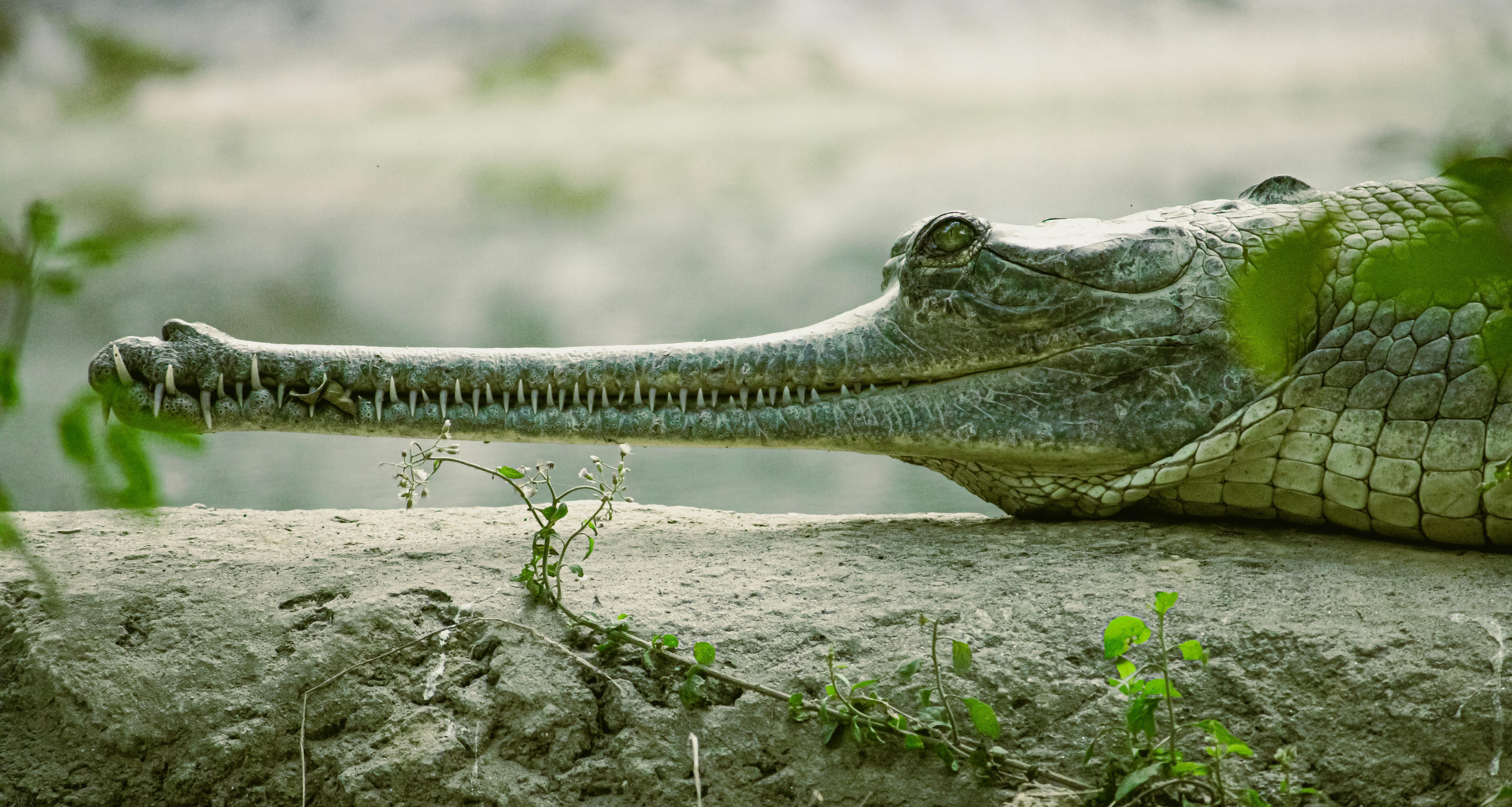
About the Gharial
The Gharial, also known as the Indian crocodile, is a large crocodilian found primarily in the rivers of the Indian subcontinent. They are known for their long, narrow snout, which is uniquely adapted to catching fish. Despite being a fierce predator, they are critically endangered due to habitat loss, hunting, and pollution.
Scientific Classification
- Kingdom: Animalia
- Phylum: Chordata
- Class: Reptilia
- Order: Crocodylia
- Family: Gavialidae
- Genus: Gavialis
- Species: Gavialis gangeticus
Habitat and Distribution
Gharials are found primarily in the river systems of India, Nepal, and Bhutan, preferring deep, fast-flowing rivers with sandy banks. Their habitat is being destroyed by dam construction, river pollution, and human settlements.
Threats to Survival
- Habitat Destruction: Dams, river pollution, and human settlements disrupt their habitat.
- Poaching: Gharials are hunted for their skin and eggs.
- Fishing Nets: They often get trapped in fishing nets, leading to injury or death.
Conservation Efforts
Several initiatives are underway to save the Gharial, including:
- Establishing protected areas and sanctuaries for breeding.
- Monitoring populations through surveys and studies.
- Working with local communities to reduce human impact.
Fun Facts
- Gharials can live up to 50 years in the wild.
- They primarily eat fish and are known for their excellent swimming ability.
- Their long snouts help them catch fish more efficiently than other crocodilians.
Learn More About Endangered Species
Join us in protecting the Gharial and other endangered species. Every action counts!
Learn More