Baobab Tree
Vulnerable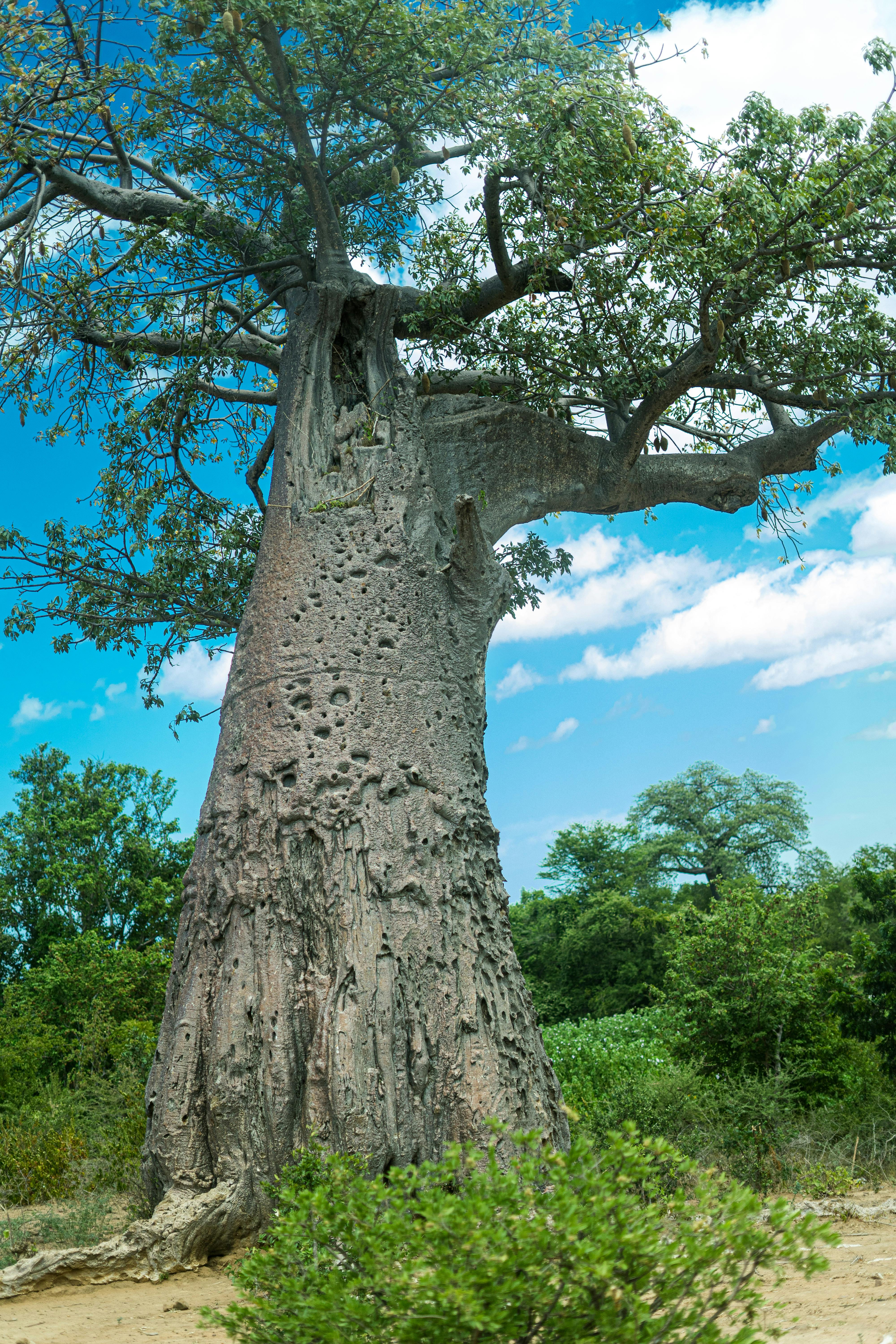
About the Baobab
The Baobab Tree (*Adansonia*) is an iconic and ancient tree found mainly in Africa, Madagascar, and Australia. Known as the "Tree of Life," it provides food, water, and shelter for many species, including humans.
Scientific Classification
- Kingdom: Plantae
- Phylum: Angiosperms
- Class: Eudicots
- Order: Malvales
- Family: Malvaceae
- Genus: Adansonia
- Species: Multiple (including Adansonia digitata, Adansonia grandidieri)
Habitat and Distribution
Baobabs grow in dry, arid regions of sub-Saharan Africa, Madagascar, and parts of Australia. They are highly drought-resistant, storing water in their massive trunks to survive long dry seasons.
Threats to Survival
- Climate Change: Rising temperatures and changing rainfall patterns are making it harder for young Baobabs to thrive.
- Deforestation: Expanding agriculture and logging threaten Baobab populations, especially in Madagascar.
- Overharvesting: The fruit, bark, and leaves of Baobabs are widely used for food and medicine, sometimes leading to unsustainable harvesting.
Conservation Efforts
Several conservation programs are working to protect Baobabs from extinction.
- Reforestation projects in Africa and Madagascar.
- Protection of Baobab groves through conservation areas.
- Raising awareness about the importance of Baobabs for local communities.
Fun Facts
- Some Baobab trees are over 2,000 years old!
- The tree can store thousands of liters of water in its trunk.
- Baobab fruit is rich in vitamin C and is considered a superfood.
- It is sometimes called the "Upside-Down Tree" because its branches look like roots.
Help Protect Baobabs
Baobabs are more than just trees—they support entire ecosystems and provide for communities. Support conservation by planting trees and raising awareness!
Learn More